AT&T and Ericsson Demonstrate 5G Integrated Sensing for Drone Detection
Key Highlights
- AT&T and Ericsson demonstrated how existing 5G infrastructure can detect, locate, and track drones using Integrated Sensing and Communication (ISAC) technology.
- The demonstration leveraged Ericsson Massive MIMO radios, synchronized cellular sites, AI-enabled sensing algorithms, and advanced signal processing to enable real-time environmental sensing without standalone radar systems.
- Multiple drones flying between 300 and 400 feet were successfully detected and continuously tracked, with the system providing location, velocity, and elevation data.
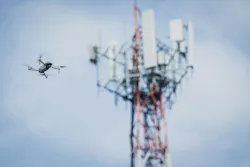
AT&T and Ericsson have demonstrated how existing 5G infrastructure can support real-time drone detection and tracking through Integrated Sensing and Communication (ISAC), highlighting how advanced sensing capabilities often associated with future 6G networks can begin to emerge using today's wireless technologies.
The demonstration took place in authorized airspace outside AT&T Stadium in Arlington, Texas, where the companies used Ericsson's Massive MIMO radios deployed across multiple existing cellular sites to create a multi-static sensing configuration. Rather than relying on dedicated radar systems, the demonstration used standard cellular radio transmissions combined with advanced signal processing and AI-enabled sensing algorithms to detect, locate, and continuously track multiple drones.
According to the companies, drones operating at altitudes between 300 and 400 feet were successfully detected and tracked throughout their flights. By combining measurements from multiple synchronized sensing nodes, the system generated real-time information including target location, velocity, and elevation while improving detection reliability and positioning accuracy.
The demonstration illustrates how communications infrastructure can serve a dual purpose by providing both wireless connectivity and environmental sensing. Ericsson said the approach leverages existing network assets, potentially reducing deployment costs compared with standalone sensing platforms while enabling wide-area coverage through existing cellular infrastructure.
The project also demonstrates the continued evolution of Integrated Sensing and Communication, an area receiving significant attention as the wireless industry develops technologies expected to become part of future 6G standards. Rather than requiring entirely new network architectures, ISAC builds on advanced radio capabilities, software enhancements, and synchronized network operation to add sensing functionality alongside traditional communications services.
Potential applications extend beyond drone awareness to include improved situational awareness for large venues, critical infrastructure, transportation hubs, and public-sector environments. The companies also envision future uses in event operations, logistics coordination, and infrastructure monitoring, where network-based sensing could complement existing communications capabilities.
AT&T and Ericsson said they plan to continue evaluating ISAC technologies through additional demonstrations as industry standards mature and the path toward commercial 6G deployments develops.
The demonstration underscores a broader industry trend toward expanding the role of wireless infrastructure beyond connectivity, enabling existing 5G networks to support emerging sensing applications through software, advanced radio technologies, and continued standards evolution.
Source: Ericsson
Stay Connected with ISE Magazine
Subscribe to our newsletters and magazine for the latest telecom insights, explore the current issue for in-depth features and strategies, and register for upcoming webinars to learn directly from industry leaders.