What is Fiber to the Home (FTTH)?
Key Highlights
- FTTH delivers faster internet speeds, lower latency, and more reliable connections compared to DSL and coaxial systems.
- The technology reduces interference and signal loss, ensuring consistent performance for applications like streaming, gaming, and cloud services.
- Fiber's scalability and longevity make FTTH a future-proof solution capable of supporting multi-gigabit speeds for decades.
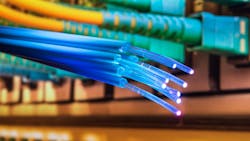
Fiber to the Home (FTTH) is a broadband network technology that uses fiber-optic cables to deliver high-speed internet directly to homes and businesses. Instead of relying on older copper-based infrastructure like DSL or coaxial cable, FTTH provides a dedicated fiber connection end-to-end.
This enables faster speeds, lower latency, and a more reliable internet experience, especially for bandwidth-heavy applications like streaming, gaming, cloud services, and smart home technology.
How Fiber to the Home Works
Fiber to the Home networks deliver internet by transmitting data as pulses of light through glass optical fibers. Fiber can maintain high performance over many miles, unlike copper-based networks, which rely on electrical signals and experience interference and signal loss with increasing distance.
Because of this, FTTH can provide higher bandwidth, lower latency, and more consistent performance over previous technologies.
Key Components of an FTTH Network
An FTTH network has several primary elements that work together to move data between a service provider and end user. These include:
- A Central Office (CO) or Headend: This is the main location where service providers have their network equipment and connect to the internet service backbone.
- Optical Line Terminal (OLT): An OLT is a network device located in the CO that converts electronic signals into optical signals and manages traffic between multiple subscribers.
- Outside Plant (OSP) Fiber Infrastructure: This includes the physical fiber pathways (cables, splice points, junctions, etc.) that carry the optical signal from the OLT toward the service area.
- Optical Network Terminal (ONT): An ONT is a device that is installed at the customer’s location that converts the optical signal back into electronic signals that routers, Wi-Fi systems, and connected devices can use.
Going beyond the basics, there are two main architectures used to build FTTH systems: Passive Optical Networks (PON) and Active Optical Networks (AON).
Active Optical Networks and Passive Optical Networks
HPE describes active optical networks as using a powered or “active” router or aggregated switch to disperse data from a service provider to their users, with each customer requiring a specific fiber and router/switch port.
On the other hand, passive optical networks use one router/switch port and a single fiber between the router/switch and a passive splitter to provide service to a number of subscribers.
Unlike AONs, the splitters used in PONs utilize glass and mirrors to direct light (which is data), eliminating the need for an external power source.
Benefits of FTTH
Fiber enables higher bandwidth capacity with the ability to support multi-gigabit speeds for residential, commercial, and industrial users. Unlike coaxial or DSL systems, FTTH provides consistent performance during peak usage periods without bottlenecking and significant degradation in quality over a distance.
Because FTTH technology transmits data using light and not electrical signals, it reduces interference, signal loss, and latency. The consistent stability of FTTH supports telemedicine, online learning, cloud computing, and other applications that require reliable connectivity.
One Major Advantage
According to a Fiber Broadband Association post describing the association’s “Fiber Broadband Scalability and Longevity” white paper, fiber broadband to subscribers is the sole communications technology with the ability to support rising demands for increased speed and capacity with no upgrades required to the outdoor fiber cabling itself.
The post further states, “The paper finds fiber’s scalability is virtually unlimited, supporting speeds 60,000 times higher than today’s 10 Gbps systems. Fiber’s longevity has already exceeded 35 years since the first deployments, and the average lifetime is expected to be much longer based on the materials, technologies, and manufacturing processes used to produce modern, high-quality optical fiber.”
An FTTH Council Europe resource page discusses one of the most praised qualities of Fiber to the Home, its scalability. FTTH has been called “future proof” because it can be upgraded without needing the fiber itself to be replaced, which allows for the surrounding infrastructure to be updated as needed.
The council even notes, “Since the 1980s, FTTH has expanded to meet the increasing network requirements of the contemporary world. The fact that many fibre cables installed in the 1980s remain in use today is evidence of their adaptability through time.”
Stay Connected with ISE Magazine
Subscribe to our newsletters and magazine for the latest telecom insights, explore the current issue for in-depth features and strategies, and register for upcoming webinars to learn directly from industry leaders.
About the Author

Serena Aburahma
Associate Editor | Cabling Installation & Maintenance
Serena Aburahma is an experienced editor and writer for CI&M, Lightwave, and ISE. Serena has pitched and created content for B2B and B2C audiences across various industries, including technology, video games, insurance, cars, pop culture, and more.
Much like the content Serena has written about, her interests vary as well. Aside from creative writing, she is particularly passionate about learning about everything and anything, meandering in nature, playing video games, traveling, and reading.