Utility Make-Ready to Speed Deployments
Key Highlights
- Make-ready drives major broadband delays and cost overruns.
- OTMR speeds coordination but doesn’t eliminate complex make-ready costs.
- State-specific rules create regulatory and cost uncertainty.
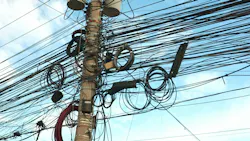
The promise and limits of one-touch make-ready.
In telecommunications and broadband deployment, make-ready activities are often the primary source of project delays and unanticipated costs. One-Touch Make-Ready (OTMR) was promoted by the Federal Communications Commission (FCC) as a means to accelerate broadband deployment and reduce these delays. Although OTMR can expedite multi-party coordination and lower barriers to entry for new service providers, it also introduces operational, safety, and liability considerations that must be carefully addressed.
Make-ready is the process of preparing utility poles for joint use installations of new attachments to help ensure worker and public safety. Joint use refers to an arrangement where multiple entities share the same physical infrastructure, such as a utility pole. A utility pole is typically owned by one company, either an electric utility or a telecom provider, and when multiple entities are connected to the same pole, this shared arrangement is referred to as joint use and is moderated through licensing contracts and formal pole attachment agreements.
Joint use is covered by the Joint Use Agreements (JUA): legal contracts that govern how multiple parties can share the available vertical space on the same utility pole. The JUA covers attachment safety and construction rules, such as those specified in the National Electrical Safety Code (NESC), as well as defined costs, expected timelines, and inspection and maintenance responsibilities. When clearing space for a new attachment on a utility pole requires rearrangement of existing utilities on a pole, it is important to review the condition of old or overloaded poles that might need reinforcement or replacement and upgrading or replacing poles or infrastructure.
OTMR has the potential to improve the efficiency of the pole attachment processes by addressing one of the most persistent bottlenecks in broadband deployment: multi-party coordination.
A utility pole is divided into supply space and communications space with a Communications Worker Safety Zone (CWSZ) defined by the IEEE NESC in Rule 238E, which is governed by minimum clearances at the pole and in the span defined in 235 and 238 (IEEE, 2023). When adding a new fiber optic cable attachment to a pole, these rules govern its placement. Often, existing communications cables are already as close to power space as the code allows, and the existing attachments must move down to allow the new, lighter cable with the least sag to be placed at the top of the communications space. The engineering design and work required for this is referred to as simple make-ready. In some cases, there is not enough room for communications cables to move down and maintain adequate ground clearance, and either the electric utility cables must be rearranged, or more likely, the pole must be replaced with a taller pole to accommodate the new attachment or a stronger pole to handle the new load. Such pole upgrades are costly and generally referred to as complex make-ready. According to comprehensive studies by the Fiber Broadband Association (Cartesian, Fiber Deployment Cost Annual Report, 2023 through 2025), these costs can range from $500-$5,000 per pole, have increased in the last couple of years, and are expected to continue to increase. This significant variability can easily drive construction costs beyond budget and cause significant delays. On a typical 5,000-pole project, even a 10% pole replacement rate can shift costs by millions and delay the project for months.
In some deployments, electric utilities deploying fiber for broadband or utility communications mitigate make-ready costs by installing fiber optic cable in the supply space, typically below the neutral, rather than within the communications space. Under NESC Rule 230F provisions, fiber optic cables may be classified as a supply facility, allowing all-dielectric self-supporting (ADSS) cable to be installed in or above the supply space. This approach can avoid the need to rearrange existing communications attachments and reduces dependency on multi-party coordination, which is often the primary driver of make-ready delays and cost. While this strategy can significantly accelerate deployment and improve cost certainty, NESC clearance compliance must still be maintained, and work in the supply space must be performed by qualified electrical workers in accordance with applicable safety standards.
In the FCC Third Report and Order (FCC, 2018), the FCC acknowledged make-ready as “the largest source of high cost and delays” and introduced the OMTR concept as a solution to speed broadband deployment. OTMR has the potential to improve the efficiency of the pole attachment processes by addressing one of the most persistent bottlenecks in broadband deployment: multi-party coordination.
Under traditional make-ready, each existing attacher performs their own work sequentially, often resulting in cumulative delays as crews are scheduled weeks or even months apart. OTMR collapses this sequence into a single construction event performed by a qualified contractor, approved by the utility and other joint users on the pole. This reduces schedule uncertainty and compresses timelines for simple make-ready work. By lowering these coordination barriers, OTMR can also reduce entry friction for new providers, particularly competitive overbuilders that would otherwise face long and unpredictable deployment timelines. Although OTMR reduces time variability for simple make-ready, it does not reduce complexity-driven delays or the variability of cost. A thorough make-ready analysis must be performed in order to capture the cost and time frame expectations of an aerial fiber build.
However, these gains come with a corresponding shift in operational responsibility and risk. OTMR transfers physical control of existing facilities from the asset owner to a third-party contractor for a defined period, along with commensurate responsibility for care and maintaining service for all the attached plant for the duration.
This introduces operational complexity, as the contractor must properly identify and handle each owner’s facilities correctly. They must maintain proper clearances and tensions across different cable types (e.g., copper, coax, and fiber are attached to the same pole). Most importantly, the contractor must avoid disrupting service to customers who are sometimes configured over legacy plant configurations that may not be fully documented.
Make-ready remains one of the most significant and least predictable drivers of cost and schedule in aerial broadband deployment.
Safety is a primary concern, particularly on congested poles. Workers may be operating near the communication worker safety zone (CWSZ) and in proximity to the supply space. Because communication workers are typically not qualified for power work, strict adherence to NESC separation rules is critical. Improper handling can result in contact with energized facilities. Workers must also have adequate safe access to infrastructure on the poles for repair and maintenance. As part of the make-ready process, the pole and existing attachments shall be inspected for damage or any issue that could result in an unsafe condition.
Care must be taken not to damage existing aerial plant (copper or fiber) by excessive bending or applied tensions that could lead to service disruptions and outages for subscribers. The FCC anticipated this, as the rule requires the new attacher to notify the affected owner immediately if the contractor causes any damage and shifts the repair responsibility and cost to the new attacher. The compensation for such disruptions can be punitive depending on the service affected (911 or other life safety-related services).
Under Section 224(c) of the Communications Act, a state may “reverse preempt” the FCC by certifying that they regulate pole attachments within their jurisdiction. As a result, the FCC’s one-touch make-ready rules do not apply in those States. According to the FCC’s most recent public notice, 23 States and the District of Columbia have exercised this authority, meaning that pole attachment processes, timelines, and the availability of OTMR vary significantly across the country. In these jurisdictions, state-specific rules may differ from the FCC framework in key areas such as contractor qualification, make-ready timelines, and cost allocation, creating a fragmented regulatory landscape for broadband deployment (FCC DA-22-630; FCC Title 47 Section 224(c)).
Make-ready remains one of the most significant and least predictable drivers of cost and schedule in aerial broadband deployment. While the FCC’s introduction of OTMR represents a meaningful step toward reducing delays associated with multi-party coordination, it does not eliminate the underlying technical, operational, and regulatory complexities inherent in joint-use infrastructure. Instead, OTMR shifts the nature of these challenges from sequential scheduling delays to execution risk, contractor performance, and liability management.
The most impactful cost drivers are complex make-ready, pole replacement, and system constraints driven by existing infrastructure. These remain largely unaffected by OTMR. At the same time, variability introduced by state-level regulation, differing joint use agreements, and incomplete system visibility continues to create uncertainty for project planning and budgeting. As a result, the true hidden cost of make-ready is not simply the work itself, but the unpredictability associated with scope, coordination, and risk allocation.
For the OTMR program to be a win-win for all parties—the pole owner, existing joint users, and those new candidates for attachment—the program needs an agreed consensus process and flowchart with agreed time frames for each step in the process to help reduce contention and legal and regulatory disputes. The program needs to:
- Reduce costs for the new attaching company and, more importantly, increase the speed of the process from the initial application.
- Achieve buy-in (acceptance and cooperation) of the pole owner and existing attachers.
- Ensure make-ready work is completed rapidly, safely, and damage-free.
- Contain well-defined, clear steps with inspections and quality tests along the way.
The 2023 IEEE Guide 2939 “IEEE Guide for Joint Use of Utility Poles with Wireline and/or Wireless Facilities” provides an overview of the elements of such a make-ready process for new wireless antenna attachments. However, in the current hyper-competitive atmosphere and with multiple regulatory stakeholders in the 50 States, consensus and cooperation have proven difficult.
The elements of a successful OTMR process would need to include:
A.) Accurate and accessible maps and databases of poles and vertical space available for new attachments—pole condition, location, and a list of existing attached hardware. This data is not always available on older plants, but with the promise of asset management tools and artificial intelligence (AI), it may be achievable in the near future.
- Such data is likely to reveal that many (>70-80%) poles in a densely populated urban area are congested with no “available” space. Having accurate and accessible maps can assist the new attacher to consider different cable routes, or possible alternate designs for placing lines on new poles, cable over-lashing with partners or in buried plant early in their network design and business planning process.
B.) Consensus guidelines (required information, flowchart, and times) for an application, including:
- Pole Loading Analysis (PLA) identifying the effect of new proposed lines and equipment.
- Specify make-ready (MR) work required (new crew members, moving existing lines, etc.) and time for completion of MR.
- A timeline for X days (30?) after an application for a YES/NO decision, with a detailed reason for a rejection.
C.) Universal cost structure for rental of vertical space applied to all users—e.g., if an existing joint user wishes to add a new line, they will be charged the same as a new company wishing to attach to the pole.
- Who pays for necessary asset mapping, MR costs, and new poles (if needed) is and will be contentious. Making costs clear and unbiased early in the process will at least make economic planning easier.
- The last attacher is at a disadvantage since an existing joint user has the option of over-lashing a fiber cable to their current lines and avoiding the need for a new attachment.
D.) Agreed design principles for new line and equipment—typically based on minimum NESC or California GO 95 safety criteria augmented by local design criteria and best practices by pole owners or users:
- Minimum clearances and separations.
- Grounding and electrical protection.
- Ice and wind loadings on poles.
- Limits on pole decay before pole needs replacement.
E.) Dispute resolution process—to avoid costs of parties seeking regulatory compensation or legal litigation to resolve concerns.
Successful broadband deployment, therefore, depends not only on regulatory improvements such as OTMR, but on rigorous upfront engineering, accurate asset data, and realistic cost modeling that accounts for the full range of make-ready conditions. Utilities, attachers, and policymakers must recognize that while process improvements can accelerate timelines, they cannot fully mitigate the structural complexities of shared infrastructure. Addressing these challenges will require continued collaboration, improved data transparency, and alignment between regulatory frameworks and field realities to ensure that deployment goals are met efficiently and safely.
Stay Connected with ISE Magazine
Subscribe to our newsletters and magazine for the latest telecom insights, explore the current issue for in-depth features and strategies, and register for upcoming webinars to learn directly from industry leaders.
About the Author
 Ernie Gallo
Ernie Gallo
Principal Outside Plant and Electrical Code Consultant, NEBScore
Background • 44+ years experience in Telecom Industry • 7.5 Years Underwriters Laboratories • 33 Years Bellcore-Telcordia-Ericsson • BSEE Polytechnic University of New York Consulting Focus Areas • Electrical Safety, Electrical Protection • FCC Infrastructure Sharing During Emergencies • Outside Plant Product and Installation Standards and Audit Analytics • Industry Standards and Code Compliance – Regulatory and Safety – construction focused • Fiber to the Home – micro-trench and MDU architecture • Fiber to the Node – VDSL to the home • Wireless Products and Installation Methods • Fiber and 5G Wireless product requirements • Optical Transport Networks –Deployment Designs • Working with local Authorities Having Jurisdiction on Electrical and Fire Codes • Electrical and Fire incidents and evaluations • Expert Witness in the areas of outside plant construction and safety Industry and Project Experience Standards Work National Fire Protection Association (NFPA) • NFPA 1 Fire Code - Committee Member • NFPA 70 National Electrical Code (NEC) - Committee Member CMP1, CMP 16and Correlating Committee Member NFPA 70E -Standard for Electrical Safety in the Workplace - Committee Member • NFPA 780 Standard for the Installation of Lightning Protection - Committee Member • NFPA 855 Standard for the Installation of Energy Storage Systems - Committee Member • NFPA 75, Standard for the Protection of Information Technology Equipment - Committee Member • 2022 Committee Service Award from the Standards Council of the National Fire Protection Association (NFPA) Institute of Electrical and Electronics Engineers (IEEE) • IEEE C2 National Electrical Safety Code - Committee Member, Subcommittees SC2, SC4, SC5, and SC8 • IEEE Wire Line Subcommittee – Vice Chair • IEEE Working Group 3.6.7 Low Voltage Data, Communications and Signaling Circuit Surge Protective Devices – Chair • IEEE Working Group 3.6.10 Surge Protection of Equipment Connected to Both Low Voltage AC Power and Communication Circuits – Vice Chair • IEEE Fiber Optics Subcommittee - Committee Member Association for Telecommunications Industry Solutions (ATIS) • ATIS Board Member • ATIS Protection Engineers Group (PEG) Chair and current Advisory Board Member • ATIS STEP: Sustainability in Telecom: Energy and Protection Committee – Vice Chair • ATIS Network Power Systems (NPS) – Chair • ATIS Network Physical Protection (NPP) - Working Group Member • ATIS Network Electrical Protection (NEP) –Chair Underwriters Laboratories (UL) • Fault Managed Power Working Group UL1400 - Committee Member • Lightning Protection Components UL 96, 96A Lightning Protection Components - Committee Member • UL 497 Standard for Protectors for Communications • UL 1449 Standard for Surge Protective Devices - Committee Member • CAN/US Technical Harmonization Committee UL 62368 Standard
Ernie serves as ATIS PEG Chair. Please see https://peg.atis.org for details.
 Michelle Harry
Michelle Harry
Principal Professional Engineer, Finley Engineering
Michelle is responsible for performing advanced professional engineering work related to broadband networks including design and specifications as well as reviewing work done by others to ensure deliverables are complete, accurate, and in accordance with good engineering practice. She is also responsible for project estimation and contract management, cost studies, budget preparation, establishing design criteria, plans and specifications for voice and data access networks, transport networks, and outside plant design projects.
Michelle has over 30 years of experience in the telecommunications industry. Her background reflects expertise in multiple areas of electrical and telecommunications engineering and business planning with a focus on electric utilities. She specializes in the design of transport and access systems.
Michelle is a licensed professional engineer in 17 states. She serves on the ATIS PEG Advisory Board. Please see https://peg.atis.org for details.