Why Cable Identification is Critical Infrastructure for ISPs
Key Highlights
- As fiber networks scale rapidly, clear and consistent cable labeling is essential for reliability, speed, and minimizing downtime—not an optional extra.
- Industry standards like ANSI/TIA-606 by the Telecommunications Industry Association provide a solid framework for identifying ports, panels, cabinets, and rooms.
- ISPs don’t need to start over—cleaning up patch panels and patch cords first can deliver immediate benefits.
The Hidden Backbone of ISP Operations
As fiber networks grow at a record pace, internet service providers (ISPs) are dealing with more complexity than ever before. The pressure to deploy fast, stay reliable, and minimize downtime is constant. But there’s one aspect of network infrastructure that doesn’t always get the attention it deserves: cable identification.
It may not be the flashiest part of a broadband build, but labeling is one of the most essential. Cable labeling refers to the practice of marking cables and connections with durable, standardized tags for easy recognition and troubleshooting.
When done right, it helps avoid downtime, speeds up troubleshooting, and saves valuable time for both technicians and the business. When done poorly (or not at all), the results can be chaotic.
When Things Go Wrong, Labels Matter
Cable misidentification is more common than people realize, especially in networks that have been expanded over time or inherited through a merger. Without a clear, consistent labeling system, even simple tasks like replacing a patch cord can turn into hours of detective work. In some cases, a mislabeled or unplugged cable has brought down entire networks, with teams spending days trying to figure out what and where things went wrong.
This isn’t just about avoiding major outages. It’s about making daily operations smoother. Whether it’s a move, an upgrade, or a maintenance task, clear labeling reduces guesswork and helps field teams work more efficiently.
As fiber networks continue to expand, ISPs that standardize and automate their cable ID process will be the ones who scale reliably and stay ahead.
Labeling is Part of the Infrastructure, Not an Afterthought
In today’s networks, labeling isn’t optional. It’s a foundational part of how ISPs maintain reliability and scale with control. A well-documented cabling system supports faster installations, better inventory tracking, and faster problem resolution. It keeps operations from stalling out when the unexpected happens.
Good labeling also makes future changes easier. As networks evolve, having a system in place helps new equipment and cables integrate seamlessly, without the confusion of legacy guesswork.
Standards and Consistency Go a Long Way
One of the best ways to avoid labeling pitfalls is to start with a plan. Industry standards like ANSI/TIA-606 by the Telecommunications Industry Association provide a solid framework for identifying ports, panels, cabinets, and rooms. These standards are flexible enough to be adapted for different types of networks but detailed enough to support large-scale infrastructure.
But even the best standards fall short if not followed consistently and across teams. Misalignment between departments is one of the most common issues in cable ID. One group may label everything carefully, while another plugs in new gear without updating the records. That’s where things start to break down.
Creating a shared labeling convention and making sure it’s documented and accessible to everyone is a simple but effective step. And while spreadsheets might work for small projects, they’re easy to lose or forget. A centralized system is a much smarter long-term solution.
Labels Need to Be Built to Last
It’s easy to underestimate how much of a beating cable labels take in the real world. Outdoor environments can hit both extremes—scorching summers and freezing winters. Inside data centers, hot aisles expose labels to high temperatures, while in outdoor environments, labels can face high humidity and UV exposure. As a result, labels can wear down fast if they’re not designed for these conditions.
That’s why material selection matters. For rugged environments, stainless steel embossed tags offer excellent durability, especially for outdoor or underground cables. In data centers or cabinets, adhesive-backed wraparound or flag labels are often the better choice, as long as they’re made with materials built to withstand heat, humidity, and wear. Choosing the right label for the environment helps avoid having to redo everything later.
Even small improvements done methodically over time can make a big difference.
Taking the Guesswork Out of Documentation
As networks grow and teams get pulled in more directions, automating parts of the labeling process can make a big difference. That’s where Panduit’s RapidID Network Mapping System comes in.
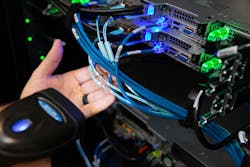
RapidID uses pre-labeled cables with unique barcodes, applied during manufacturing. During installation, field teams simply scan each cable using a handheld reader, and the software takes care of the documentation. There’s no need to handwrite anything or manually enter serial numbers. The system handles mapping, records, and even makes it easy to trace cables later.
For large projects or fast-paced rollouts, this can mean scanning an entire rack in minutes instead of spending hours labeling by hand. It’s a time-saver, but it also reduces errors, which is just as important.
Cleaning Up Legacy Networks One Step at a Time
Many ISPs are managing networks that have grown in fits and starts over the years. Some have inherited infrastructure through acquisitions or worked with contractors who didn’t follow consistent labeling practices. Cleaning that up doesn’t have to mean starting from scratch.
The most practical place to begin? Patch panels, where most of the day-to-day changes happen. From there, teams can move to patch cords and edge devices. Even small improvements done methodically over time can make a big difference in how manageable a network feels.
It’s also a great opportunity to build or refresh a company-wide labeling standard. That way, any future builds or changes can follow a system that’s already in place.
Final Thought
Cable identification might not be the most exciting part of building or maintaining a network, but it’s one of the most important. Whether you’re activating a new fiber route or tracking down an outage, having clear, durable, and consistent labels saves time, prevents mistakes, and keeps your infrastructure running smoothly.
If you’re looking for ways to improve operations, reduce service interruptions, or just make life easier for your field teams, cable ID is a smart place to start. Systems like RapidID can take a lot of the pain out of the process—and put you back in control of your network.
Stay Connected with ISE Magazine
Subscribe to our newsletters and magazine for the latest telecom insights, explore the current issue for in-depth features and strategies, and register for upcoming webinars to learn directly from industry leaders.
Cable Labeling FAQ
What is cable identification?
Cable identification is the process of labeling cables and connections to simplify network management, reduce downtime, and support troubleshooting.
Why is cable labeling important for ISPs?
Clear, consistent labeling helps internet service providers (ISPs) avoid outages, streamline maintenance, and ensure faster deployments.
What are common problems caused by poor cable labeling?
Mislabeled or missing labels can lead to service interruptions, time-consuming troubleshooting, and even full network outages.
What standards apply to cable labeling?
ANSI/TIA-606 is a commonly used industry standard that provides a framework for consistent labeling across network infrastructures.
How does Panduit’s RapidID system help with cable identification?
RapidID automates the labeling process using pre-labeled cables with barcodes, enabling faster installation, error reduction, and easier documentation.
About the Author
 Erick Carmona
Erick Carmona
Senior Technical Systems Engineer, Panduit
Erick Carmona is a Senior Technical Systems Engineer at Panduit, with over 11 years of expertise in designing infrastructure for telecommunications systems. In this role, he leads technical sales for the Northeast USA and financial accounts. Erick is a BICSI Registered Communications Distribution Designer (RCDD) and was a finalist for Panduit’s 2021 Global Innovator of the Year award. He holds a degree in Engineering in Control & Automation from IPN Mexico and completed a Transformational Leadership program at MIT.
Follow Panduit on LinkedIn, Facebook and Twitter.
 Chris McConnell
Chris McConnell
Senior Product Manager for Panduit
Chris McConnell is a Senior Product Manager for Panduit’s Identification and Safety Products businesses. Chris has been with Panduit for 22 years, working in various roles in Product Management and Business Development. His expertise covers printers, labels, and software for industrial identification, as well as safety, facility, and lockout tagout solutions. Chris has broad experience working with labeling and safety professionals across multiple industries and organizations.
Follow Panduit on LinkedIn, Facebook and Twitter.
 Mike Novak
Mike Novak
Group Product Manager for Enterprise Connectivity, Panduit
Mike Novak is the Group Product Manager for Enterprise Connectivity at Panduit, leading strategy and development for Copper Systems and the RapidID Network Mapping System. A graduate of Purdue University, Mike has spent the last decade bringing innovative, reliable solutions to market that IT managers trust and installers value.
Follow Panduit on LinkedIn, Facebook and Twitter.