Executive Insights with Darren Farnan, General Manager, United Fiber
Key Highlights
- Currently deploying XGS-PON upgrades across markets so customers can experience multi-gig speeds.
- United Fiber excels at having multiple projects ready, in case one gets hung up on permitting, rock, or other factors, they can move seamlessly to another.
- Upskilling has been crucial and contributed to a 10% ARPU increase with small business customers.

Topic: Network Evolution Roadmap
ISE: What technologies or upgrades have been most critical in boosting connectivity speeds across your footprint, and what innovations are you exploring to improve the overall customer experience further?
Darren Farnan: When we started United Fiber in 2011, we launched as a greenfield GPON network, and that decision gave us a strong foundation. Today, we’re rolling out XGS-PON upgrades across our markets so our customers can experience multi-gig speeds. We’ve always believed physical connectivity is only part of the equation; the Wi-Fi experience inside the home or business is just as necessary.
Managed Wi-Fi, Outdoor Wi-Fi, SmartBiz, and SmartTown solutions from Calix enable us to meet our customers where they live, work, and play, while ensuring their connection remains seamless in their home, business, or out in the community.
We always prioritize fiber because it’s the most durable, scalable technology available. But in some extremely rural or hard-to-reach areas, we will look at fixed wireless as a bridge until fiber becomes viable.
Topic: Next-Gen Fiber Infrastructure
ISE: How are you approaching the transition from GPON to XGS-PON or other next-gen technologies to deliver multi-gigabit speeds? In your view, what defines a “future-ready” fiber network?
Farnan: We’re in the middle of our XGS-PON deployment, and that technology is powering the launch of multi-gig services across our markets. In many of the communities we serve, we’re the only fiber provider, so we have a responsibility to make sure our customers aren’t just keeping pace but staying ahead. To me, a “future-ready” network is scalable, flexible, and built with standards that evolve right alongside consumer demand.
Topic: Hybrid Network Strategies
ISE: In rural areas where fiber is too costly to deploy, how do you evaluate when to invest in fiber builds versus fixed wireless or other alternatives?
Farnan: We always prioritize fiber because it’s the most durable, scalable technology available. But in some extremely rural or hard-to-reach areas, we will look at fixed wireless as a bridge until fiber becomes viable. Our litmus test is simple: can the technology support the digital demands of today—remote work, healthcare, and education—without compromise? If the answer is no, it’s not an option for our customers.
Topic: Expansion Versus Consistent Quality
ISE: How do you manage the tension between rapid expansion and the need for consistent service quality?
Farnan: Expansion without quality is meaningless. Our roots as a rural electric cooperative provide a member-focused approach, which has shaped the service quality expectations we have for our telecommunications services. We’ve grown quickly, but we do it in a way that matches our financial resources and our workforce capacity. Our team excels at having multiple projects ready, so if one gets hung up on permitting, rock, or other factors, we can move seamlessly to another. We release a targeted number of passings each month, which keeps our construction and installation teams running at peak efficiency. It’s a repeatable process that keeps our employees, contractors, and customers on the same page.
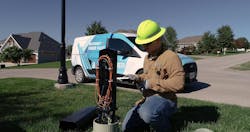
Topic: Small Business = Anything but Small
ISE: United Fiber has focused its growth efforts on serving its small business customers. Share how you moved the needle there and how Wi-Fi played a role in your small business successes in 2025.
Farnan: Small businesses are the heartbeat of the communities we serve and critical to rural vitality. Therefore, it’s crucial to deliver enterprise-grade Wi-Fi and managed connectivity to small business owners who can’t afford enterprise IT staff. We’ve seen firsthand how better Wi-Fi means better customer experiences—and that helps small businesses grow, which in turn strengthens the community. It’s a game-changer for our local restaurants, shops, and businesses.
Topic: Vendor Partners
ISE: Looking back, what were the top lessons you learned about network transformation and upskilling your field teams?
Farnan: The biggest lesson was that technology and people must evolve together. Partnering with the right vendor partners gives us great tools and excellent training. Our field teams gain confidence working with new service offers, but just as importantly, the right vendor partners help our team learn how to better engage with customers. Upskilling in both areas has been crucial, and that’s how we drove a 10% ARPU increase with small business customers. We invest heavily in network upgrades, education, and training because this industry is one of constant change.
Topic: LEOs and Broadband Definition
ISE: Share whether United Fiber plans to tap LEOs in its broadband plans and what led your team to its current decision.
Farnan: LEOs have made progress, but they still can’t deliver the symmetrical speeds and low latency that fiber can. And with programs like BEAD requiring networks to meet the 100/20 Mbps broadband definition, we’ve doubled down on fiber-first. Could LEOs play a role in mobile, emergency, or edge cases? Sure. But for the communities we serve, fiber is the only way to truly future-proof broadband access.

Topic: Permitting and Regulatory Challenges
ISE: Permitting delays and regulatory variability remain significant hurdles for our industry. What solutions or process improvements have you found effective?
Farnan: Permitting delays can derail projects if you’re not prepared. We’ve learned to engage communities and regulators early, map out requirements in advance, and dedicate teams just to ensure we handle these potential roadblocks well ahead of construction. Like most things, it is about communication and preparation. It’s not glamorous work, but it pays dividends in smoother builds and better relationships with local officials.
Topic: Skilled Workforce Development
ISE: The scale and pace of today’s network providers require a highly skilled workforce. What new skill sets or certifications are becoming increasingly important for network engineers, techs and construction teams?
Farnan: We need people who understand optical networking, cybersecurity, and cloud orchestration. On the field side, key skills include splicing, advanced Wi-Fi diagnostics, and strong customer communication. Certifications in cybersecurity and fiber optics are rising, and we are implementing more formal training programs across these departments.
Topic: Powering the Future
ISE: Technological innovations in power and energy storage solutions allow operators to improve network resilience. Describe the nuts and bolts behind United Fiber’s network strategy that address the reality of a fallible power grid.
Farnan: As an electric cooperative, we have a strong background in grid resilience and start by placing many of our hub locations next to our substations. In the event of an electrical outage, these are the primary locations to get back on first. We’ve also invested in battery backups, redundant systems, and on-site generators. That way, even if the grid goes down, our customers can stay connected until we restore service. Connectivity is essential, and we build resilience into our design.

Topic: Industry Leadership
ISE: What role do you believe providers like United Fiber should play in shaping the future of broadband in the U.S.?
Farnan: Providers like United Fiber have a responsibility beyond just delivering service—we play a critical role in bridging the digital divide. For rural America, especially, connectivity can’t be taken for granted, and there are still too many people who are not connected. Our rural communities deserve the same access to education, healthcare, and jobs—it is critical to our economic survival. Our role is to push for policies and investments that make broadband accessible and affordable while setting a standard for innovation, reliability, and customer experience.
Topic: Company Culture
ISE: Share two strategies you use to nurture your team’s culture.
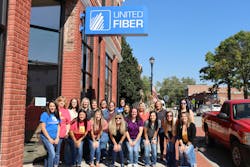
Farnan: First, we believe in transparency – sharing our goals, challenges, and wins openly, and our teams know they are part of something special. Second, we focus on empowerment. We trust our employees to make decisions and strive to provide them with the training and resources to succeed. That combination builds a culture where people feel both connected and valued. One of our favorite things as a group is sharing customer compliments as they come in across the whole company. It is fantastic to see the support our employees provide for each other and the positive energy these moments create. It may seem like a small thing, but it really hits at the core of the value we are providing every day.
Topic: Thumbs Up / Thumbs Down
ISE: What’s a favorite thing about your job, and what’s your least favorite?
Farnan: My favorite part is seeing the impact we have on families and businesses when we bring fiber into their communities. Hearing stories from our customers about how United Fiber has improved their lives is number one for me and our employees. My least favorite part is delays, whether they come from drawn-out funding programs, regulatory issues, or construction problems—things that slow down our ability to serve people who need broadband now, not months or years from now.
Topic: Being Uncomfortable
ISE: What makes you uncomfortable as a leader and why?
Farnan: I’m uncomfortable when I feel disconnected from the day-to-day experiences of our employees. As organizations grow, it’s easy for leaders to get insulated. I push myself to stay connected because when leaders lose touch, culture and performance suffer.
Topic: What’s Next?
ISE: What haven’t you done professionally that you’d like to do in the next five years?
Farnan: At this point in my career, I want to spend more time mentoring and developing future leaders. My focus now is on ensuring we position United Fiber to thrive well beyond my tenure. That means helping our next generation of leaders who will take the company even further. We are blessed with an amazing group of caring and talented employees, so I know United Fiber is in great hands.
Topic: Legacy
ISE: What do you hope your professional legacy is when you’re comfortably retired on a tropical island?
Farnan: I hope my legacy is that I was part of a group that closed the digital divide in Northwest Missouri and built a high-quality organization that will continue serving communities long after I’ve stepped away. I strive to be a leader that cares about people and creates opportunities for employees to grow, thrive and carry the mission forward. Growing up in this area and seeing the value United Fiber has created for our region, our electric membership, and employees, is more fulfilling than I could have ever imagined.
Darren Farnan has worked for United Electric Cooperative since 1994 and serves as the General Manager of United Fiber. He led the development and operations of the United Fiber network, which has grown to 4,800 miles of fiber, 81 employees, and over $50 million in annual revenue since turning up their first fiber customer in 2013. Currently, United Fiber serves 42,000 combined residential and commercial fiber customers. For more information, visit unitedfiber.com.
Stay Connected with ISE Magazine
Subscribe to our newsletters and magazine for the latest telecom insights, explore the current issue for in-depth features and strategies, and register for upcoming webinars to learn directly from industry leaders.
About the Author
 Sharon Vollman
Sharon Vollman
Content Ambassador for ISE EXPO
Sharon Vollman is the Content Ambassador for ISE EXPO. She is passionate about collaborating with thought leaders, SMEs and hard-working doers who design, plan and deploy ultra-reliable broadband networks. Vollman is committed to creating a variety of educational offerings for ISE EXPO attendees that inspire them to connect every U.S. citizen with the broadband networks we all want for our children and grandchildren.
Vollman has created educational partnerships with Broadband Service Providers including AT&T, Verizon, Lumen, Frontier Communications and others. She has covered the telecom industry since 1996.