Empowering Convergence: ISE EXPO Advisory Board Insights
Key Highlights
- Autonomy Needs Strong Foundations: AI-native networks depend on clean data, integrated systems, and unified operations.
- Legacy Systems Slow Progress: Fragmented infrastructure and poor interoperability remain major roadblocks.
- Trust & Security are Critical: Explainable AI, governance, and cybersecurity are essential for adoption.
- Tech Roles are Evolving: Field technicians must upskill into hybrid network-software roles.

Topics: AI-Native Networks; Upskilling Team Members; Operational Realities
As fixed and mobile networks continue to converge, industry leaders face unprecedented challenges in balancing infrastructure evolution with emerging technologies. From AI and autonomous networks, edge computing, and next-generation wireless to permitting, deployment, operations, and long-term security/resiliency, ISE EXPO helps network professionals find practical solutions for every part of broadband’s future.
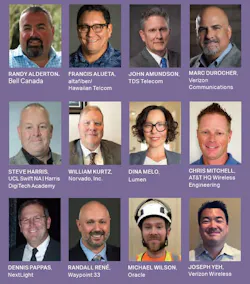
To outline a plan for this transformation, we met with the distinguished members of the 2026 ISE EXPO Advisory Board. Made up of visionary leaders from Tier 1, 2, and 3 service providers, this board reflects the collective intelligence of the ICT sector.
Whether you are an outside plant technician or a C-suite executive, their insights provide actionable intelligence to help you build, operate, and create secure, resilient networks for our hyper-connected future.
Topic: AI-Native Network Operations
ISE: Share your thoughts on implementing autonomous systems that execute complex multi-step workflows across the fixed/mobile networks’ operational cores, focusing on fully integrated intelligent networks. What are the primary technical and logistical challenges network service providers face when moving from AI assistants to these truly autonomous, self-healing network entities?
Randy Alderton, Bell Canada: The evolution toward autonomous network operations creates a fundamental shift in how fixed and mobile networks are managed. Modern autonomous systems aim to create intelligent, self-adapting, and self-healing ecosystems that optimize performance with minimal human intervention. This transition offers potential improvements in efficiency, resilience, and service quality. However, moving from today’s AI-assisted environments to fully autonomous networks will require overcoming a complex set of technical and organizational barriers.
Some technical challenges:
- Integrating advanced AI and machine learning capabilities across heterogeneous network environments. Modern networks often consist of multivendor components and legacy systems that lack standardized interfaces, making seamless interoperability difficult.
- Data quality and real-time data management present additional challenges. Autonomous systems depend on large volumes of accurate, high velocity information—from telemetry and logs to performance metrics. Yet these data sources often vary widely in structure and quality, complicating efforts to normalize and correlate them at scale.
- Security considerations further heighten the complexity. As AI becomes embedded in core operations, the systems that support automated decision-making become attractive targets for cyberattacks. Protecting data pipelines, automation workflows, and model outputs must be foundational to any autonomy strategy.
Some organizational and logistical challenges:
- Autonomous networks demand a workforce skilled in AI/ML, automation frameworks, data science, and systems engineering—while still retaining deep network expertise. Upskilling existing staff and attracting new talent is essential for sustainable transformation.
- Cultural change is also required. Organizations must shift from traditional human-centered workflows to models where machines play a central role in operational decision-making. This transformation requires rethinking processes, governance structures, and accountability frameworks.
- Achieving autonomy requires meaningful investment—not only in platforms and tooling but also in infrastructure and workforce development. Clear business justification, including operational efficiency, reduced downtime, and enhanced customer experiences, will be crucial in securing executive commitment and long-term funding.
Marc Durocher, Verizon Communications: From a technical perspective, this is the ideal end state. We’ve been working hard to build the best self-healing networks that identify issues and potential problems, then take the necessary steps to remediate them before our customers notice any adverse change in their experience. One technical challenge is accurately training the models to determine which actions should be fully autonomous and which may require human review and approval. Creating the right risk awareness intelligence is critical.
From an operational perspective, AI assistants are often less risky to implement because they still ultimately depend on humans to make the final call. Fully autonomous solutions are also much more complicated to integrate into existing systems and disparate platforms.
Steve Harris, UCL Swift NA | Harris DigiTech Academy: Implementing fully autonomous, self-healing access/core networks represents the next evolution beyond AI assistants, requiring broadband operators to unify complex multi-domain and multi-vendor systems across fixed and mobile infrastructures. Note: Many of these projects are underway. For example, big data databases, data ingestion, and data lakes will be fundamental, enabling our next-generation proactive networks. In my research for my Big Data peer-reviewed paper, I outlined the work Comcast is doing with PNM, Cox with Big Data, and Liberty with platform unification.
Our biggest technical hurdle lies in integrating our legacy operation support systems (OSS)/business support systems (BSS), access networks, regional area networks (RAN), core, network operations centers (NOCs) and transport systems into a single, real-time telemetry and control framework. Data quality and consistency are critical, as autonomous decisions depend on accurate, end-to-end network visibility. We also see a big push from broadband operators to build out their central offices (COs) and headend sites into more data-center-like facilities, and to integrate hyper-scalers’ data centers.
Organizational workstream silos (e.g., data islands), workforce skill gaps, and a lack of vendor community alignment compound the challenge, requiring new roles in AI governance, intent orchestration, and closed-loop assurance. Trust and explainability are essential to ensure broadband operators and regulators can validate automated actions in their networks without compromising customer experience. Security, privacy, and governance frameworks must evolve alongside autonomy to mitigate the risks of erroneous or malicious network behavior.
Investment uncertainty and legacy infrastructure limitations further slow adoption, particularly for service providers balancing CapEx and OpEx priorities. Ultimately, moving toward truly intelligent networks is less about AI sophistication and more about redesigning our current operational processes, workforce capabilities, industry standards, and infrastructure to enable safe, integrated, and autonomous decision-making.
William Kurtz, Norvado, Inc.: The transition from AI-assisted operations to fully autonomous, self-healing network systems represents a significant leap in both technological capability and organizational maturity. While the vision of intelligent networks that monitor, diagnose, and resolve issues without human intervention is compelling, the practical implementation is constrained by several core challenges.
From a technical standpoint, interoperability across legacy systems remains one of the most significant barriers. Many service providers operate with a patchwork of OSS/BSS platforms, vendor-specific network elements, and fragmented data environments. Enabling autonomous decision-making requires a unified data architecture, consistent telemetry, and a high degree of automation across all operational layers—from provisioning and fault management to security and policy enforcement.
Additionally, the development of AI models capable of contextual awareness, predictive analytics, and real-time orchestration demands not only massive volumes of high-quality training data but also continuous validation and governance to avoid unintended outcomes. This includes the ability to detect and resolve issues without exacerbating downstream dependencies—something that requires both domain-specific intelligence and a robust exception-handling framework.
Logistically, the shift to autonomous networks introduces organizational challenges as well. Service providers must reconcile existing operational models with the implications of reduced manual intervention, including changes to roles, accountability structures, and incident response protocols. Cybersecurity is another critical consideration—autonomous actions must be auditable, secure, and aligned with broader risk management frameworks.
Ultimately, the move toward self-healing networks will be evolutionary, not revolutionary, requiring phased integration, rigorous testing, and a parallel investment in change management and workforce readiness.
Chris Mitchell, AT&T HQ Wireless Engineering: Autonomous systems capable of executing complex, multi-step workflows across fixed and mobile networks demand far more than incremental improvements to today’s AI-assisted operations. They rely on unified, real-time visibility across RAN, transport, and core domains, along with strong policy and intent-translation frameworks that convert high-level objectives into precise, safe operational actions. Achieving this level of autonomy requires harmonizing fragmented data sources, managing distributed AI/ML models at the edge and in the cloud, and ensuring consistent, closed-loop automation across multi-vendor environments. Providers must also prioritize trust, auditability, and security so autonomous systems can act independently without compromising network stability.
Beyond the technical lift, network operators face significant organizational and logistical challenges as they transition from manual, domain-centric operations to automation-first models. This shift requires rethinking workflows, governance structures, and workforce skill sets so operational teams evolve from hands-on troubleshooting to oversight, policy design, and exception management. Clear guardrails, standardized data models, and strong interoperability frameworks are essential to ensure autonomous behaviors remain aligned with business intent. Ultimately, this evolution represents a cultural transformation as much as a technological one—enabling networks to become proactive, self-correcting, and truly intelligent in how they manage complexity at scale.
Randall René, Waypoint 33: Across the network and operations teams I have worked with, the move from AI assistants to truly autonomous, self-healing network operations has much less to do with plugging in smarter algorithms. It has more to do with getting the basics right. Most service providers are still working with fragmented data, disconnected tools, and processes that rely on people to manually connect planning, construction, operations, and customer care. In that environment, AI can make suggestions, but it cannot safely act on its own.
Autonomous systems need clean, trusted, and current network data, clear rules around what systems are allowed to do, and a shared understanding of how decisions are made. That often means doing the unglamorous work first. Data must be cleaned up, systems must be aligned, and broken workflows must be fixed before autonomy can deliver real value. Skipping those steps only increases risk, drives up costs, and leads to frustrated employees and unhappy customers.
I believe the harder challenge is not a technical fix, it is people focused. Simply put, autonomous networks change how decisions are made and who is accountable when something goes right or wrong. Now, when these decisions affect their employees' pay, performance metrics, and satisfaction, there is a lot to carefully consider. Providers need to rethink workflows, better align OSS and BSS platforms, and set clear guardrails for when systems act on their own and when people step in. After all, trust sits at the center of this shift.
Ultimately, operators must understand and be able to communicate clearly why an autonomous or AI-based system made the decision it did, especially when service reliability, safety, or regulatory requirements are involved. For that reason, the move to AI native operations must happen in steps. I believe it begins with integrated data and closed-loop automation in a few high-value use cases, building confidence over time, and only then grows into networks that can monitor, decide, and heal themselves at scale.
Michael Wilson, Oracle: Implementing fully autonomous systems can offer major benefits in efficiency and reliability, but providers will face big challenges when considering the shift. I personally believe trust is the most important obstacle we all must overcome with any AI/ML application. Will the company be able to convince employees and customers that they are better off with it in place? Ultimately, the shift is inevitable, but how we prepare and present it will make the difference in perception. Excluding trust, the industry has a patchwork of legacy technologies, making it difficult to scale comprehensive systems reliably and remain compliant with the various regulatory and reporting laws. Additionally, security concerns should be researched to ensure we are not creating a backdoor to critical infrastructure or automating safeguards against intrusion threats.
Topic: The 2026 Technician Skills Gap
ISE: As the network becomes almost entirely software-defined, how is the "boots on the ground" role evolving? What are the realistic strategies network service providers can use to upskill their field techs into hybrid network-software technicians?
Randy Alderton, Bell Canada: The role of a field technician is undergoing a significant transformation. The focus is shifting from purely physical hardware installation and repair to a more integrated approach that blends physical infrastructure knowledge with software understanding and automation.
How a technician’s role will evolve:
- Hardware Swapping to Software Validation: While physical infrastructure (fiber, antennas, CPE, racks) still requires hands-on attention, the emphasis shifts from replacing faulty hardware to validating software deployments, configuring virtual network functions (VNFs) or containers, and ensuring the physical layer supports the logical, software-defined services.
- Augmented Troubleshooting: Technicians will leverage advanced diagnostic tools, augmented reality (AR) overlays for guided procedures, and remote access to centralized orchestration platforms. They become the eyes and hands of the remote operations center, executing tasks validated or initiated by software.
- Edge and CPE Focus: The physical edge of the network, including customer premises equipment (CPE), small cells, and edge computing nodes, remains a critical domain for field technicians. These locations are the physical anchors for increasingly distributed and virtualized services.
- Data-Driven Operations: Field technicians will increasingly interact with data dashboards, interpret telemetry, and provide structured feedback that feeds into AI-driven network management systems. Their reports become vital data points.
- Proactive Maintenance and Deployment: Instead of reacting to failures, techs will be involved in proactive tasks such as ensuring optimal physical conditions for virtualized deployments, performing planned upgrades of underlying hardware, and validating new service rollouts from a physical-to-logical perspective.
Realistic ways to upskill field techs:
- Modular, Role-Based Training Programs:
- Curriculum Design: Develop training modules that progressively introduce concepts like basic Linux command-line interfaces, network automation scripting (e.g., Python), API fundamentals, virtualization (NFV/SDN concepts), cloud basics, and containerization (Docker/Kubernetes).
- Tiered Approach: Offer foundational courses for all techs, with advanced modules for those moving into more specialized hybrid roles.
- Blended Learning and Hands-On Labs:
- Online Resources: Utilize e-learning platforms for self-paced learning of theoretical concepts.
- Virtual Labs: Provide access to simulated network environments (e.g., using GNS3, EVE-NG, or cloud-based labs) where technicians can practice configuration, scripting, and troubleshooting without impacting live networks.
Marc Durocher, Verizon Communications: The invention of the elevator didn't replace stairs. However, we've certainly adapted the way we use them. The same goes for our physical "boots on the ground." Instead of working on more repetitive issues and tasks that can be done remotely or virtually, we shift those resources to more technically specific work or new roles. For example, our technicians may not be physically plugging in cross-connect cables. Yet they are verifying that digital cross-connects are posted properly within software applications.
Many of our field technicians are experiential learners. So, we provide less formal class time and more time to watch and learn through hands-on activities. We don't just give them new tools; we involve them in the feedback loop. When a field tech sees how their physical intervention triggers a successful software “handshake” on their tablet, the “software-defined” concept becomes real.
Early exposure to new tools and time to work with them independently, with robust support, has proven highly effective. We use "over-the-shoulder" remote support tools, allowing a more experienced employee to help and see what the field tech sees in real-time when they need assistance. This turns every interaction into a live training session when needed.
Steve Harris, UCL Swift NA | Harris DigiTech Academy: As broadband networks become predominantly software-defined (SDN), the “boots on the ground/field operations” role is shifting from manual installation and break/fix work toward software-assisted, data-driven field operations. Field technicians are no longer just touching fiber, radios, or power; they are becoming the last-mile extension of the control plane (operations part of the network), validating KPIs, and translating field reality into the digital realm. The field operations team is increasingly guided by remote orchestration systems (e.g., proactive network maintenance, AI-driven diagnostics) and standardized workflows rather than by tribal knowledge and memorization of vendor metrics.
From an advisory standpoint, the most realistic upskilling strategies start with job role evolution, not role replacement. Broadband operators began focusing on building hybrid technicians who understand physical-layer fundamentals (e.g., fiber optics/wireless) and how those layers are represented in software—provisioning systems, at the packet level, digital twins, service models, and telemetry (our KPIs). This means teaching field techs how to interpret dashboards, validate automated configurations, capture/share structured data during installs (e.g., OTDR trace), and escalate issues with contextual insight rather than legacy raw trouble tickets.
Successful training programs use stackable credentials (e.g., FOA) and competency-based training rather than one-time retraining events. We also need to make sure the competency extends beyond knowledge (e.g., online courses/PPT); our workforce needs hands-on skills and abilities. We need to start with baseline digital literacy (IP fundamentals, networking fundamentals, virtualization/cloud concepts, application program interfaces (APIs) at a conceptual level), then layer in SDN principles (e.g., orchestration 101), remote testing tools, and AI-assisted troubleshooting. Hands-on labs should mirror real field behaviors: provisioning via orchestration tools, validating services with software-driven test sets, and feeding clean data back into the OSS/BSS/data lake.
Equally important is tooling that is easy to use and accurate. Modern field techs need guided workflows (e.g., augmented-reality-based), mobile apps tied to our orchestration systems, and standardized test platforms that abstract complexity while reinforcing industry best practices. When our industry tools are designed correctly, technicians don’t need to become software developers—they need to become software-aware operators!
Finally, providers should create clear career pathways that reward these hybrid skill sets: installer → field technician → OSP plant maintenance engineer → network automation specialist or remote operations engineer. When field teams see SDN as a growth opportunity rather than a threat, our adoption accelerates. In a software-defined world, “boots on the ground” don’t disappear—they evolve into the next generation software technician/engineer that keeps our AI/autonomous networks aligned with physical reality.
William Kurtz, Norvado, Inc.: As networks become increasingly software-defined and virtualized, the traditional role of field technicians is undergoing a profound transformation. The historical emphasis on physical maintenance—splicing fiber, configuring hardware, and resolving discrete equipment faults—is expanding to include responsibilities that intersect with software-defined networking (SDN), automation platforms, and digital monitoring tools.
Field personnel are now expected to interact with software interfaces, interpret real-time network data, and, in some cases, execute updates or diagnostics via cloud-based management systems. This convergence of physical and logical layers necessitates a hybrid skill set that includes basic scripting, familiarity with network topologies, and an understanding of virtualized infrastructure components.
To facilitate this transition, service providers must adopt deliberate, scalable upskilling strategies. These may include:
- Modular Training Programs: Developing tiered curricula that introduce foundational software/networking concepts and progressively build toward SDN, NFV, and automation workflows. Training should include hands-on labs and simulation environments that reflect real-world field scenarios.
- Micro-Certifications and Badging: Implementing internal certification programs aligned with industry standards (e.g., MEF, CompTIA, Cisco) to validate specific competencies without requiring full reclassification of personnel.
- Mentorship and Shadowing: Pairing traditional field techs with network engineers or automation specialists to promote knowledge transfer in live operational contexts.
- Cross-Functional Work Assignments: Embedding technicians into cross-disciplinary project teams to expose them to design, provisioning, and troubleshooting workflows beyond the field environment.
The goal is not to turn every technician into a software engineer, but to cultivate a workforce that can operate effectively in a hybrid environment—bridging the gap between physical infrastructure and intelligent network control.
Chris Mitchell, AT&T HQ Wireless Engineering: As networks become fully software‑defined, the traditional “boots on the ground” role is shifting from hardware-centric tasks to a more hybrid model that blends field expertise with software, cloud, and automation skills. Field technicians are still essential, but the nature of their work is evolving—from physical installation and troubleshooting to validating digital workflows, interpreting telemetry, and supporting remote, software-driven changes. Instead of manually provisioning or configuring devices, technicians increasingly interact with orchestration systems, assess data from intelligent network platforms, and ensure that automated actions align with real-world conditions. This evolution doesn’t eliminate the need for field roles; it elevates them, turning technicians into critical extensions of the software-defined network’s feedback and assurance loops.
To enable this transition, network service providers need realistic, scalable upskilling strategies that build software fluency without losing the operational intuition field teams already possess. Effective approaches include hands-on training tied to real tools—such as integrated workflow platforms, digital survey solutions, and orchestration systems—paired with structured learning paths that introduce cloud fundamentals, API‑driven network operations, and automation frameworks. Providers can also leverage modular training environments, role-based certifications, and mentorship from engineering teams to steadily grow technicians into hybrid network‑software practitioners. The goal isn’t to turn every field tech into a software engineer, but to equip them with the skills to operate confidently in a software-orchestrated world where physical insight and digital proficiency are equally essential.
Randall René, Waypoint 33: Throughout the world and in nearly every network I have worked with, the field technician role is changing in clear and practical ways as networks become more software defined. The job is no longer only about installing or fixing equipment. It now includes finding problems using data, checking that work matches what the service is supposed to deliver, and working alongside automated systems. The physical network still matters, but software now guides much of the work and how success is measured. Technicians are being asked to review network data and confirm that their field work matches the network's digital view. The gap I see is not ability or effort. It is that many organizations still treat physical work and software systems as separate, even though the network no longer works that way.
The most effective upskilling approaches are practical and grounded in real-world work. Technicians learn faster when training is tied to the tools and tasks they use every day, rather than abstract software ideas. This means bringing GIS, network inventory, testing, and work management into one field experience and showing how each action updates the system of record. For instance, short, role-based training, combined with hands-on practice and mentoring, is more effective than long classroom programs. When technicians see that these skills help them fix issues faster, reduce repeat work, and improve network quality, software skills become a natural part of the job instead of an extra burden.
Michael Wilson, Oracle: While I do see a strong shift towards SDNs, many technicians are still going to be engaged in the physical construction, repair, and installation activities that remain consistent with what we see today. A computer will not run cable, splice fiber, set a pole, or dig a hole which is why skilled trades will always be a safe and secure career pathway. However, upskilling is very important to upward mobility and being able to accurately troubleshoot/correct complex issues with shifting technologies. It is crucial to grow/retain talent by providing the current workforce with engaging opportunities and growth.
Employers should:
- Provide education reimbursement budgets and encourage the use of them.
- Provide rotational/mentorship programs for real world coaching and experience.
- Encourage vendor neutral certifications AND provide vendor specific SDN training.
- Build an internal culture of learning from the top down.
A Special Thank You to Our 2026 Advisory Board
We are deeply grateful to the dedicated team of visionaries who volunteer their time and strategic insight to keep ISE EXPO the industry’s most trusted resource for network transformation.
Their collective expertise is vital in:
- Shaping educational programming: Ensuring content is relevant and timely.
- Addressing technical challenges: Focusing on the most pressing issues facing the ICT industry today.
- Providing expert guidance: Offering non-binding, strategic advice that provides essential flexibility.
While this Q&A features insights from a few, the entire board’s unwavering commitment drives our event’s success. Thank you for your leadership, your passion for innovation, and your vital role in connecting the professionals who build the world’s communication networks.
For more on our 2026 ISE EXPO Advisory Board members, visit iseexpo.com/2026/advisoryboard.
Stay Connected with ISE Magazine
Subscribe to our newsletters and magazine for the latest telecom insights, explore the current issue for in-depth features and strategies, and register for upcoming webinars to learn directly from industry leaders.
About the Author
 Sharon Vollman
Sharon Vollman
Content Ambassador for ISE EXPO
Sharon Vollman is the Content Ambassador for ISE EXPO. She is passionate about collaborating with thought leaders, SMEs and hard-working doers who design, plan and deploy ultra-reliable broadband networks. Vollman is committed to creating a variety of educational offerings for ISE EXPO attendees that inspire them to connect every U.S. citizen with the broadband networks we all want for our children and grandchildren.
Vollman has created educational partnerships with Broadband Service Providers including AT&T, Verizon, Lumen, Frontier Communications and others. She has covered the telecom industry since 1996.