Where Fiber Meets the Facility: Why Connecting Inside and Outside Plant Infrastructure Matters
Key Highlights
- The building entrance is a transition point, not the end of the network; infrastructure records should continue through facilities and active equipment.
- Linking geographic, physical, facility, active, and service data helps teams trace connections and dependencies in either direction.
- Connected infrastructure information supports faster provisioning, better capacity planning, fault localization, and smarter expansion.
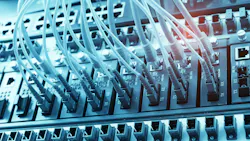
As fiber networks continue to expand, telecommunications providers face an increasingly complex challenge: managing the infrastructure that connects outside plant (OSP) networks to the equipment and services inside their facilities. While network expansion often focuses on extending fiber routes, ducts, and cables into new areas, the journey does not end at the building entrance. The connection between outside and inside plant infrastructure is equally critical to delivering reliable services, maximizing capacity, and supporting future growth.
Yet, many organizations manage these environments through separate systems, workflows, and data models. Outside plant teams maintain records of routes, cables, ducts, and splice closures, while inside plant teams manage entrance facilities, patch panels, racks, shelves, cards, and active equipment. Each team may have an accurate view of its respective domain, but without a connected view of the entire network, important information can get lost at the transition point.
Bridging this gap is becoming essential as operators look to improve operational efficiency, accelerate service delivery, and make better use of existing infrastructure.
The Building Entrance Is Not the End of the Network
Outside plant and inside plant infrastructure represent different physical environments, but they are part of the same end-to-end network. The building entrance is simply where the infrastructure transitions from one environment to another. A route ends at a facility termination, a strand lands on a patch panel port, and a patch cord carries the connection on to an active equipment port.
When infrastructure documentation stops at this transition, teams are left without a complete understanding of how network resources connect. An outside plant engineer may know the exact cable route and splice location, while an inside plant technician understands the rack configuration and available ports. However, answering a seemingly straightforward question, such as where a particular fiber terminates and which service depends on it, may require input from both teams and manual reconciliation of their records.
The result is operational friction. Teams spend time tracking down information, validating documentation, and coordinating across departments before they can make decisions or move forward with planned work. In some cases, the organization becomes dependent on individual employees who have the institutional knowledge needed to connect the dots.
The challenge is not necessarily a lack of infrastructure or capacity. It is a lack of continuity in how that infrastructure is documented and managed.
Disconnected Records Create Hidden Capacity Challenges
One significant consequence of disconnected OSP and ISP records is the difficulty of accurately determining available network capacity.
For example, a provider may receive a request to activate a new broadband service in an area that appears to have sufficient fiber coverage. A geographic information system (GIS) may show an existing cable route, and an inventory system may indicate that a port is available. On paper, the connection appears feasible.
However, further investigation may reveal that the available strand is already assigned in the splice records, the facility termination does not match the original design, or the identified port is reserved for another deployment. What initially appeared to be a straightforward provisioning request becomes a time-consuming investigation.
This is how providers end up with stranded capacity, delayed activations, unnecessary site visits, and avoidable truck rolls. Not always because the network lacks resources, but because they cannot confirm that those resources form a complete, available path.
True capacity is not defined by an individual fiber strand, termination, or equipment port. It depends on the entire connection, from the outside plant route through the facility and into the active equipment supporting the service.
A connected infrastructure view helps providers distinguish between resources that appear available in an individual system and those that can actually support a new connection. This distinction is critical for more accurate planning and investment decisions.
Moving Beyond Asset Inventory to Connected Infrastructure
Consolidating infrastructure records into a single repository is an important step, but simply having more information in one place does not solve the underlying problem. The real value comes from establishing relationships between assets and understanding how they depend on one another.
Consider the complete path of a fiber connection. A cable contains individual fibers. Fibers pass through splice points and terminate on patch panels or distribution frames inside the facility. Patching connects those ports to active equipment, and those ports support specific services.
When these relationships are explicitly documented, teams can trace infrastructure in either direction. They can start with a geographic route and follow it through splice closures, building entrances, patch panels, racks, and active ports. Alternatively, they can begin with a customer service and trace its dependencies back through the equipment and physical network.
A connected view brings together several layers of infrastructure context:
- Geographic information: The location of routes, ducts, cables, cabinets, and other outside plant assets.
- Physical inventory: Cables, fibers, splice points, terminations, and connections installed throughout the network.
- Facility infrastructure: Buildings, equipment rooms, racks, and available space.
- Active and logical inventory: Equipment, cards, ports, and logical connections delivering network functionality.
- Service information: The customers and services that depend on specific infrastructure resources.
Each layer provides important information, but the relationships between them are what make the data operationally useful. Rather than switching between systems and relying on manual interpretation, teams can follow the same infrastructure path across different views and understand how individual resources contribute to service delivery.
Improving Service Delivery, Maintenance, and Network Expansion
Connecting OSP and ISP infrastructure delivers practical benefits across the network lifecycle, from initial planning and deployment to ongoing maintenance and expansion.
Faster service provisioning
Before activating a new service, providers need to confirm that every component of the proposed connection is available. This includes the serving route, duct and cable capacity, available fiber strands, splice connections, facility terminations, patching, and active equipment ports.
With connected infrastructure information, provisioning teams can validate the complete path rather than relying on isolated inventory records. This reduces the likelihood of assigning resources that appear available but cannot support the requested service.
More effective capacity planning
Network growth requires more than determining whether additional fiber can be deployed. Providers must also consider facility constraints, including available rack space, equipment ports, power and cooling where applicable, and existing service dependencies.
A connected infrastructure model allows planners to evaluate these factors together. A route may have sufficient fiber capacity, for example, but the facility may lack available termination space or power to support additional equipment. Identifying these constraints early helps providers make informed investment decisions and avoid costly surprises during installation.
Improved fault localization and impact analysis
When an outage occurs, operations teams need to understand not only where a problem originated but also which services and customers may be affected.
By tracing service dependencies back through active ports, patching, facility terminations, fibers, splice points, and cable routes, teams can better identify potential fault locations and assess the impact of planned or unplanned work. This also improves field coordination by giving technicians more precise information about the infrastructure they need to inspect or repair.
Smarter network expansion
Before committing to new construction, providers should understand what existing infrastructure can be reused. Are there available ducts along the desired route? Can an existing cable serve the area? Is there capacity at the splice closure? Can the serving facility accommodate additional terminations and equipment?
These questions span geographic, physical, and active infrastructure. A connected view allows planners to evaluate existing resources and compare expansion options before committing budgets, equipment, and field crews.
Making Infrastructure Continuity an Operational Priority
Technology alone cannot solve every challenge associated with disconnected infrastructure. Providers also need consistent processes for maintaining accurate records and ensuring information follows the network throughout its lifecycle.
Several practices can help establish this continuity:
- Establish a shared data model. Align how OSP, ISP, facilities, and equipment resources are represented so infrastructure relationships remain consistent across teams.
- Define data ownership. Establish clear responsibility for maintaining accurate information, particularly when infrastructure moves between engineering, construction, provisioning, and operations.
- Capture as-built changes promptly. Ensure updates made during construction and installation are reflected in infrastructure records while details can still be verified.
- Connect physical assets to services. Link geographic and physical infrastructure to active equipment, logical resources, and the services that depend on them.
- Standardize naming conventions. Consistent asset identifiers, location references, and connectivity rules make information easier to exchange and interpret.
- Integrate operational systems. Connect infrastructure management with GIS, OSS/BSS, assurance, and workflow systems to support continuity across business processes.
- Put infrastructure data to work. Use connected information in everyday decisions involving provisioning, capacity planning, maintenance, and network expansion, not just documentation and audits.
The goal is not necessarily to force every team to use the same tools or follow identical workflows. It is to ensure that information captured by one team is accessible and meaningful to the next. A splice connection documented by construction should be visible to provisioning, while a port assignment made during activation should be available to operations.
Connecting the Network from End-to-End
As fiber networks become more extensive and complex, providers need to look beyond individual infrastructure components and understand how the entire network fits together. Managing outside and inside plant as separate domains creates information gaps that can undermine service delivery, limit visibility into available capacity, and complicate network operations.
Implementing an infrastructure management solution designed to connect physical, logical, and active resource information across communications networks is crucial. By bringing together geospatial and schematic network views, cable and splice relationships, facility and rack details, equipment cards and ports, and service dependencies, an infrastructure management solution can provide, when backed by the practices above, a consistent infrastructure context across the network lifecycle. This connected foundation supports network planning and rollout, service fulfillment, assurance, capacity management, and field coordination while providing the reliable resource relationships needed to support greater automation.
Ultimately, the network does not stop at the building entrance, and infrastructure management should not stop there either. The ability to trace a connection from the outside plant route through the facility and into the equipment delivering a service is fundamental to making better use of existing resources, reducing operational friction, and preparing for future network demands.
Stay Connected with ISE Magazine
Subscribe to our newsletters and magazine for the latest telecom insights, explore the current issue for in-depth features and strategies, and register for upcoming webinars to learn directly from industry leaders.
About the Author
 Mark Egan
Mark Egan is a Sales Director with more than seven years of experience in the telecom and data center arena. At FNT Software, he brings strong expertise in IT infrastructure and networks, helping customers understand how to manage capacity, plan footprint expansions, and scale their networks effectively.
Related

 dreamstime_l_285170952