Broadband's Next Phase
Key Highlights
- Operators are combining fiber, mobile, fixed wireless, and satellite to meet different customer and geographic needs. The key challenge is making these technologies work together seamlessly while presenting customers with a simple, reliable experience.
- The panels emphasized that technology is not the main barrier to AI adoption—organizational readiness, change management, standardized processes, and workforce adoption are the main barriers.
- Operators must prioritize hands-on workforce training, network quality, maintenance, customer adoption, and total cost of ownership.

Across two ISE EXPO keynote panels, operators and industry leaders discussed convergence, AI, automation, workforce readiness and why the job does not end when the network is built.
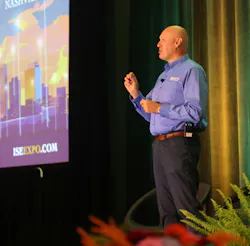
Early in the closing keynote, Steve Harris asked whether convergence had made anyone’s business simpler. He called for a show of hands. None went up.
Near the end of the discussion, Harris returned to the same idea. “Convergence didn’t eliminate complexity,” he said. “It shifted to execution.”
That observation connected the show’s opening and closing keynotes. Fiber, mobile, fixed wireless and satellite all entered the conversation, but the speakers spent little time debating which technology would win. Their focus was what happens when operators put those technologies to work together.
The opening keynote, moderated by Randall René of Waypoint 33, featured Ashley Church, General Manager of GFiber's West Region; TJ Plumley, Chief Field Services Officer at United Fiber; Kristina Harrison, Executive Vice President of Operations at Brightspeed; and Dave Stehlin, CEO of the Telecommunications Industry Association (TIA).
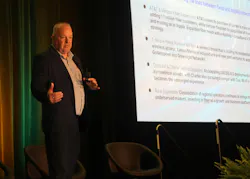
The closing keynote, sponsored by UCL Swift, was moderated by Steve Harris, the company’s Vice President of Sales and Marketing. The panel featured Shirley Bloomfield, President of ShirleyConnected LLC and former CEO of NTCA–The Rural Broadband Association; Bo Gresham, Chief Revenue Officer at Dycom Industries; and Michael Hamilton, Director of Operations for C Spire’s Fiber Business Unit.
Together, the two conversations offered a snapshot of where the industry is focused, and what's coming next.
Convergence Opportunities and Complexities
Convergence, the show’s theme, connected both keynotes. Operators are now leaning on a broader mix of technologies to reach customers and support new services. This flexibility is particularly valuable in markets where a single type may be rendered impractical by terrain, density, cost, or timing.
The speakers agreed, though, that a wider mix of technologies does not simplify things.
"For convergence to work, the consumer doesn't care how they get connectivity," said Church. "It's our job to handle the complexity internally and make it simpler for customers, consumers, and operators."
While an operator can combine networks behind the scenes and present one service experience to the customer, each additional technology will bring its own complexity through planning, construction, and support.
Hamilton said operators can be reluctant to move beyond an architecture they know. Familiar technology comes with familiar procedures and employees with experience who understand how to deploy and maintain.
Gresham emphasized the scale of such a change during a multiyear construction program.
"The amount of effort required to make an architectural change across the entire process, through your employees, vendors, and materials, is tremendous," he said.
Bloomfield added identity as another consideration for community-based providers.
“Sometimes it’s branding,” she said. “You think of yourself as, ‘Well, we’re a fiber provider.’ What does it mean if I add a mobile play?”
That shift can expose siloed decision-making and require technicians to support technologies outside the legacy network they know.
The speakers' comments suggested that the winning technology mix will depend less on labels than on an operator's ability to make the mix function as one dependable service.

Making the Network Disappear
Church’s answer to a question about GFiber’s next bold move was simplification. Speed will remain important, she said, but capacity and coverage are now baseline expectations. The harder task is reducing the effort required of the customer.
“Consumers don’t want to contact us,” Church said. “They don’t want to be in touch with us. As long as they’re connected, they just want it to work.”
Hamilton described the same objective as making the network invisible.
“They do not care about the deployment method,” he said. “They simply want to know it works when they walk in the door.” That expectation turns installation, support, and other internal matters into part of the product.
Harrison pointed to the ordering experience offered by satellite providers. “I can have a box delivered in two days, set it up and have it work,” she said.
Plumley saw that tradeoff firsthand. United Fiber had received strong interest in fiber service in one area for months, but the construction schedule took time. By the time the cooperative was ready to build, he said, about 80% of the group had already gone with Starlink.
“It’s hard to convince someone to switch away from something that’s working,” Plumley said.
The same friction can slow migrations from legacy networks.
“Customers have inertia,” Harrison said. “They don’t wake up in the morning and say, ‘I need a new technology in my home.’”
A voice-only or DSL customer may see little reason to change as long as the existing service still works. Moving to fiber can require placing an order, scheduling an appointment, and accepting new equipment. Operators therefore have to make the transition easy enough that customers see the benefit instead of an inconvenience.
AI and Automation
During the opening keynote, René asked the panelists to finish a sentence: The biggest thing slowing AI adoption in the industry is not the technology; it is what?
Church answered organizational readiness. Plumley pointed to change leadership and resistance. Harrison said organizational adoption. Stehlin chose attitude.
That exchange exemplified the keynote's treatment of AI and automation. The tools can help operators schedule work, analyze performance and reduce repetitive tasks. The value of those tools, though, still depends on whether the organization is prepared to change the work around them.
Church said automation has to remove work. It should not add another screen, dashboard, or reporting requirement to an employee's day.
“Automation will shine a bright light on all the inconsistencies in your processes and standards,” she said. “Trying to slap automation on something without first standardizing and simplifying it is just putting a Band-Aid on the problem.”
Automation can expose a broken process, but it cannot decide who owns the process or make disconnected teams work together.
Harrison made the same distinction from an operations perspective.
"This isn't about automating existing bad processes," she said. "It's about eliminating and transforming the way you perform those processes."
Plumley urged operators to look at complete workflows. A scheduling improvement will have limited effect if dispatch, inventory, customer communication, and technician reporting remain disconnected. One department may become faster while the customer's end-to-end experience changes very little.
“The challenge is that we keep looking at individual pieces of processes,” Plumley said. “We’re looking at one stage instead of looking at the process holistically.”
United Fiber's electric and telecommunications operations offered a practical example. Fiber improved meter reading at substations, reduced repeat trips, and created connections for security cameras and linemen. The technologies came together on the network, but the supporting systems and business models remained separate.
Legacy systems make the problem harder. Harrison said specialized groups often remain aligned around particular network types. Unless an operator retires older platforms as customers migrate, the new network becomes one more environment to operate rather than a replacement.
Her practical challenge to the audience was to select a legacy system, process, or technology and put a retirement date on it.
The opening panel placed AI in context. The speakers treated it as a tool that can accelerate good operating decisions, but not as a substitute for standard processes, clear ownership, and employees who understand the work.
Execution Still Comes Down to People
Hamilton offered an example of how workforce readiness can directly affect network reliability.
“I can think of a PON deployment from maybe 10 years ago,” he said. “The deployment of the fiber—everything was smooth, everything was good. Within about a month, we started seeing light-level fluctuations within the network. We eventually found that there was a training gap and a connector had not been installed properly,” Hamilton continued. “That was all it was.”
Finding it, however, required tracing the trouble through multiple areas of the network until the team isolated the source.
“It’s this group. It’s this team. It’s this guy,” Hamilton recalled. “And then he never got the proper training.”
Hamilton's story illustrated why training belongs in the same conversation as network design. A specification can describe the optical budget and performance target, but it can’t ensure that every field tech has proper knowledge and experience.
Harris offered another example. He described an operator team that watched a webinar and a PowerPoint presentation and was then considered certified to perform fiber work.
“You have to provide hands-on, tactile, practical training,” Harris said.
Gresham framed the industry's workforce challenge as both a recruiting problem and an opportunity. He began his career in 1997 as a ground hand. At the time, he said, he needed the hours and had a young child; it was a job, not necessarily a career path. Today, he said, the industry can offer a broader range of career opportunities that include new construction methods, automation, and AI.
That gives employers a different recruiting message. Gresham suggested asking prospective workers, “Do you want to learn about AI? Let me show you how AI helps us build.”
The question, he said, is how companies approach training and help new employees see a future in the industry.
Hamilton said telecommunications has not always been presented as an attractive career to younger workers, although he sees interest returning to the skilled trades. Bloomfield added that smaller operators may struggle to compete with larger companies on compensation and incentives. That makes development and retention as important as recruiting.
Operators also must give employees the practical training they need to succeed in the field. Otherwise, a workforce challenge can quickly become an operating and customer-service problem.
“I guarantee there are people in this room who have sent the same technician to the same customer seven times for a trouble call,” Hamilton said. “The customer is complaining, and the company has not invested in training. We have to get it right the first time.”
Harris described the resulting ripple effect: another truck roll increases operating costs, and an unresolved problem can cost the company a customer.
The Build is Only Step One
While broadband programs are typically measured in route miles and passings, those do not show whether customers adopt the service, whether the network is economical to maintain, or whether the operator can support the offerings the network makes possible.
Bloomfield challenged the idea that a completed fiber build marks the finish line.
"There is a mindset in the industry that says, 'I built my fiber network. I have fiber to the home. I am done,'" she said. "We have to get past that because the build is only step one. The job begins once you build the network."
Hamilton translated that point into total cost of ownership. Operators have to account for maintenance, trouble calls, and the service ecosystem that surrounds the plant. A construction choice that saves money at the beginning may create a large problem if it generates repeat dispatches or requires skills the operator cannot readily supply.
“I built the network, but how am I going to operate and maintain it, handle trouble calls and manage the entire ecosystem?” Hamilton said, describing the question operators must be prepared to answer.
Gresham said the answer is not to force one construction method onto every location. A single program may require different methods based on terrain, density and other conditions. The objective is a toolbox broad enough to fit the work, supported by quality and repeatability across crews and markets.
Asked whether the greater risk was moving too slowly or building incorrectly, Gresham chose the latter.
“If you are moving slowly, there are levers we can pull to speed you up,” he said. “If you build it wrong, you can waste a lot of money.”
Hamilton agreed. “You get one shot,” he said. “You have to build it right.”
The same logic applies to access technology. Fiber remains the preferred platform for many providers, but fixed wireless or satellite may be more practical in some places. The keynote speakers did not present technology neutrality as an excuse to lower expectations. They presented it as a reason to use the right option (provided the company can operate and support it reliably).
Bloomfield encouraged rural providers to think of fiber as a platform rather than a completed product. Operators are using their networks to support mobile service, cybersecurity, business connectivity and other offerings. Those opportunities can deepen a provider's relationship with its community, but every new service adds responsibilities and can stretch a smaller organization.
Bloomfield pointed to Direct Communications, which expanded beyond fixed connectivity with its Direct Mobile offering. She also cited Randolph Communications in North Carolina, which has used its fiber platform to pursue business services, cybersecurity and hospital connectivity. The examples showed how a community provider can extend its existing network and customer relationships without attempting to build every capability alone.
That led Bloomfield to one of the closing keynote's most useful questions: "What kind of company do you want to be?"
A provider may be technically able to offer a long list of services without having a clear reason to offer all of them. Starting with the customer need can help determine which capabilities belong inside the company, which call for partners and which do not fit the business.
For rural operators, Bloomfield said trust remains an important advantage. These providers often know their communities and have long-standing customer relationships. Their constraints are scope and scale.
“Part of the challenge will be taking the reputations they have spent years building in their communities and transferring that trust into the business transformation and customer experience they need to deliver,” Bloomfield said.
Partnerships can help smaller providers add capabilities without sacrificing the local accountability that made those relationships valuable. The provider still needs a clear view of its role and the experience it intends to own.
What to do Next
The two keynotes covered a large area, but many of the recommendations were intentionally small and practical.
Plumley urged operators to find one process bottleneck and work through the entire flow rather than optimizing a single department. Harrison challenged companies to choose one legacy system or process and commit to retiring it. Church called for automation that actually removes work and for organizations that can adapt continuously, instead of treating transformation as a major event that occurs every few years.
Stehlin reminded the audience that “trust is the coin of the realm.” For him, that meant following through on organizational commitments, including the dates operators set for retiring legacy systems. “Once people stop trusting you,” he said, “your ability to have an impact falls apart.”
The closing panel added a field-level version of the same advice: Use the appropriate construction method, train people through hands-on work and evaluate decisions across the life of the network.
Church summarized the required mindset near the end of the opening keynote. “None of us can predict the future,” she said, “but we can prepare ourselves to adapt to it more quickly.”
None of the speakers claimed that the next phase of broadband would be simple. But they did describe a more capable industry facing a more demanding operating challenge.
The networks can combine more technologies, reach more places and support more services than before. Customers will still judge them by whether the connection works reliably and is easy to use.

Stay Connected with ISE Magazine
Subscribe to our newsletters and magazine for the latest telecom insights, explore the current issue for in-depth features and strategies, and register for upcoming webinars to learn directly from industry leaders.
About the Author
 Hayden Beeson
Hayden Beeson
Editor, ISE Magazine
Hayden Beeson is the editor of ISE Magazine at EndeavorB2B. He previously held editorial roles with Lightwave, Broadband Technology Report, LEDs Magazine and Architectural SSL.