FBA Explores the Future of Fiber Technology and Innovations Powering the AI Era
Key Highlights
- Fiber infrastructure is evolving beyond broadband access to become the essential connective layer supporting AI, data centers, cloud computing, distributed intelligence, and next-generation applications.
- Innovations such as hollow core fiber, multicore fiber, distributed optical fiber sensing, and fiber-to-the-room promise greater capacity, lower latency, enhanced network intelligence, and new applications.
- Emerging technologies will enhance—not replace—existing fiber infrastructure. Standard single-mode fiber continues to offer significant untapped capacity and long-term value as communications demands evolve.
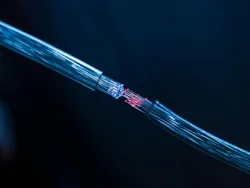
The Fiber Broadband Association (FBA) has announced the release of a new paper, The Future of Fiber Technology: What’s Next?, examining emerging innovations that will expand fiber infrastructure’s role in supporting AI, data centers, quantum networks, and other next-generation applications. Developed by FBA’s Technology Committee, the paper explores how advances in fiber technology will deliver greater capacity, lower latency, and new capabilities to meet the evolving demands of the communications infrastructure.
As AI becomes increasingly distributed and real-time, networks must do more than connect people to information. They must seamlessly connect data centers, cloud platforms, edge infrastructure, sensors, businesses, and communities with the speed, capacity, and reliability that intelligent systems need to sense, communicate, coordinate, and respond.
Fiber infrastructure is becoming the nervous system of the Thinking Economy—a new era emerging from the convergence of AI, cloud computing, and distributed intelligence. No longer simply an access technology, fiber is evolving into the foundational connective layer that enables intelligence to be generated, distributed, and put into action at scale. FBA’s new paper explores the technologies that will advance this evolution and help prepare fiber networks for what comes next.
“The fiber we are deploying today will remain the foundation of communications networks for decades, while continuing to support new capabilities around latency, density, sensing, and intelligence,” said John George, Chair of the Technology Committee for the Fiber Broadband Association.
“From connecting massive AI data centers to detecting physical activity around a fiber cable, our industry is expanding what fiber infrastructure can enable. Building the Thinking Economy requires us to look beyond bandwidth and consider everything fiber infrastructure can enable. The possibilities are endless,” adds George.
The What’s Next paper examines several emerging technologies that are shaping fiber’s next chapter:
- Hollow Core Fiber: Enables light to travel nearly 50% faster than in conventional optical fiber, offering potential advantages for applications where ultra-low latency is critical, including AI infrastructure, data centers, and high-speed financial trading.
- Multicore Fiber: Incorporates multiple single-mode cores within the same fiber cladding, significantly increasing capacity within existing physical pathways. This technology holds promise for capacity-constrained environments, including data center interconnects and submarine networks.
- Distributed Optical Fiber Sensing: Combines advances in fiber optics, electronics, machine learning, and AI to detect vibration, strain, and temperature along fiber routes. Potential applications range from identifying threats to network infrastructure before damage occurs to enabling smarter traffic management and supporting autonomous vehicles.
- Fiber-to-the-Room: Extends fiber connectivity deeper into homes and buildings, complementing Wi-Fi and addressing performance challenges caused by building materials, wireless attenuation, and traditional extender devices. As demand for seamless, low-latency digital experiences grows, this approach could become increasingly important.
Importantly, these emerging technologies build on—not replace—the fiber infrastructure already in the ground. Standard single-mode optical fiber has been commercially available for more than 40 years, has no known expiration date, and has yet to reach its full capacity. The next generation of fiber innovation will extend the capabilities and value of today's deployments, enabling existing networks to support tomorrow's applications and demands.
As the Thinking Economy takes shape, fiber's future will be defined not just by how much data networks can carry, but by the new capabilities they can enable. FBA's The Future of Fiber Technology: What's Next? paper offers a look at the innovations that will help make that future possible.
Source: Fiber Broadband Association
Stay Connected with ISE Magazine
Subscribe to our newsletters and magazine for the latest telecom insights, explore the current issue for in-depth features and strategies, and register for upcoming webinars to learn directly from industry leaders.